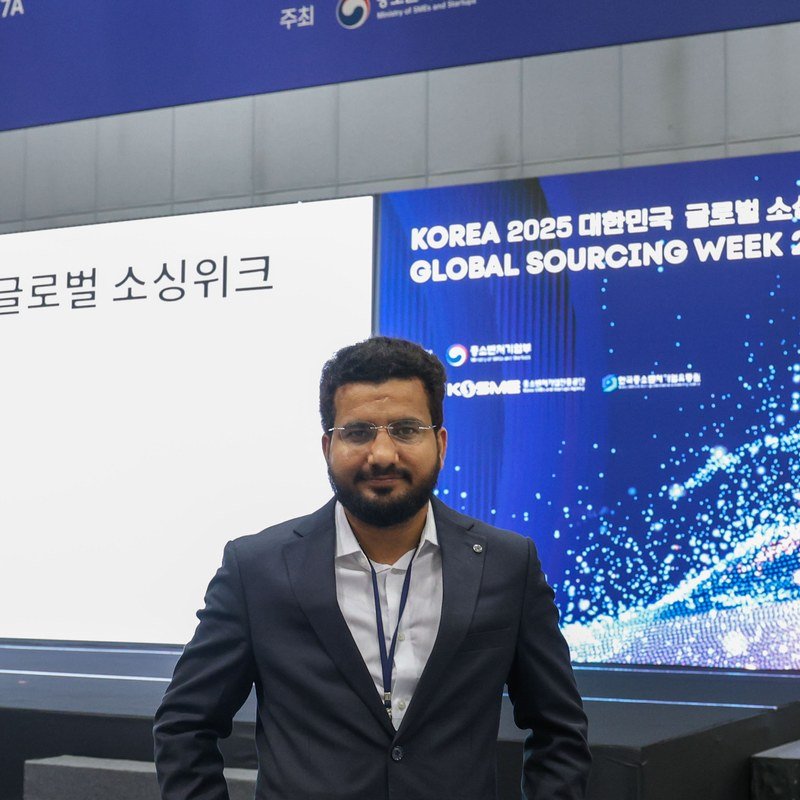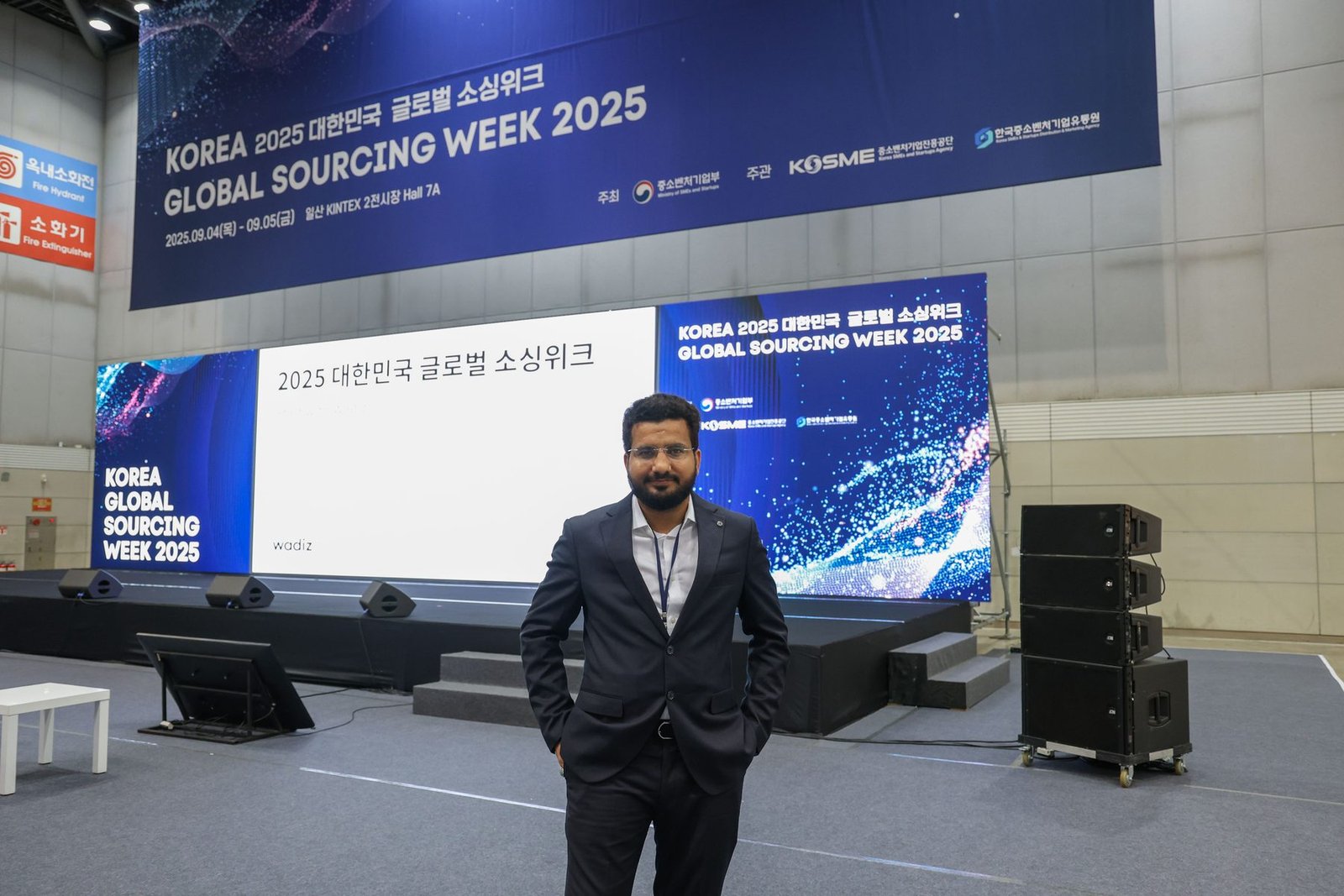
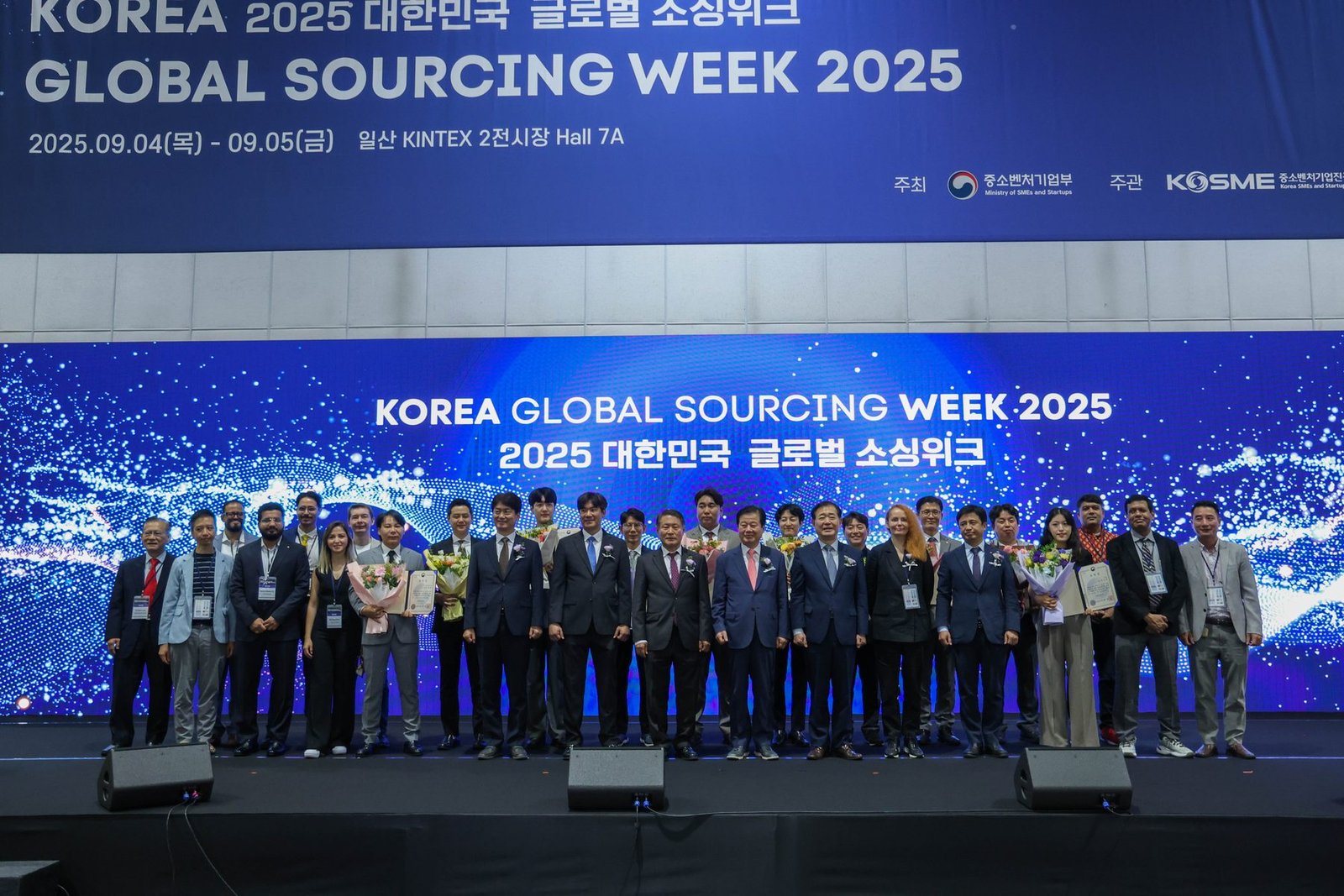
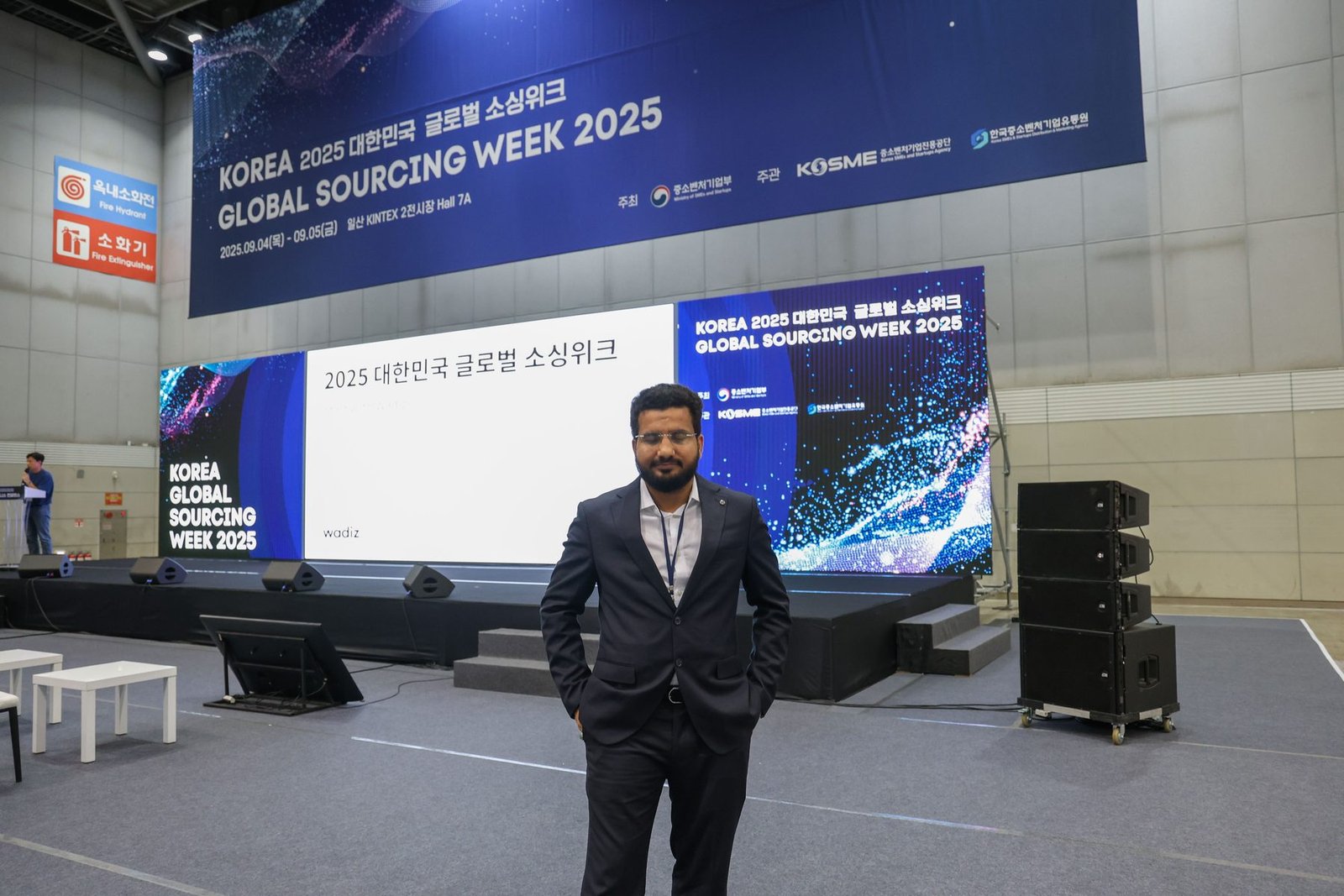
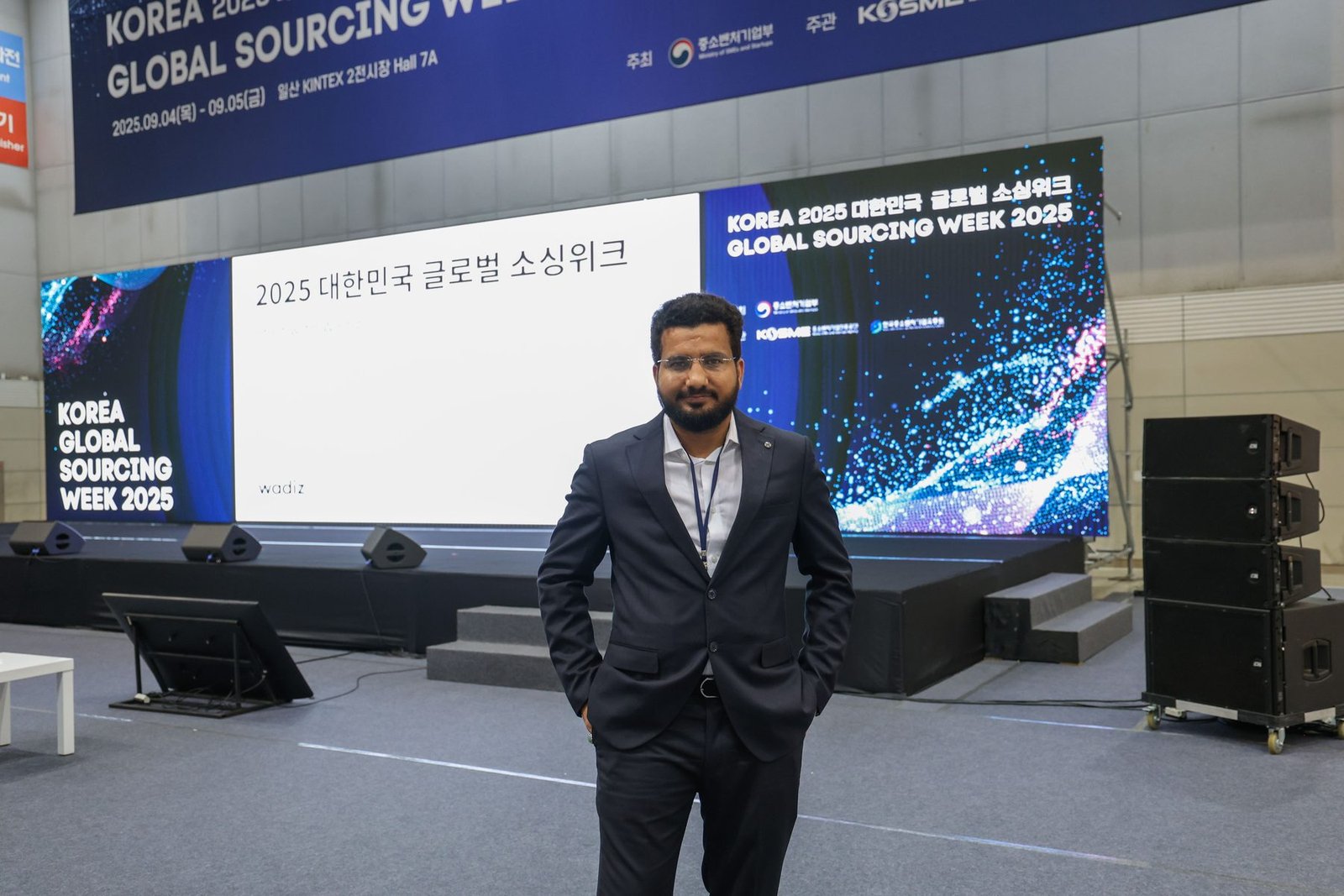
In September 2025, I attended Korea Global Sourcing Week — the official sourcing event organized by the Republic of Korea's Ministry of SMEs and Startups, held at KINTEX Hall 7A. What I came back with wasn't just business cards. It was a new way of thinking about how brands actually win.
Korea Global Sourcing Week (대한민국 글로벌 소싱위크) is one of Asia's most important B2B sourcing events. Organized at the Ministry level and hosted by KOSME (Korea SMEs and Startups Agency), it brings together verified Korean manufacturers and international buyers from across the world for two days of structured partnership-building.
For me, attending wasn't just about the event itself. It was about being inside one of the most sophisticated consumer industries on the planet — and seeing firsthand what makes Korean manufacturing a global benchmark. Nowhere is that clearer than in beauty and skincare. K-Beauty isn't a trend. It's an export economy that has reshaped how brands across the globe approach quality, packaging, and customer trust.
I went in expecting useful supplier connections. I came out with a framework I now apply to every consumer brand I work with — whether they sell skincare, supplements, fashion, or anything else.
Here's what I actually learned.
1. Quality is non-negotiable. It's the entry ticket.
The first thing that struck me about Korean manufacturers wasn't their technology — it was their standards. Every facility I visited treated quality control as the bare minimum, not a competitive advantage.
In most markets, "good enough" wins. In Korea, "good enough" doesn't even get you in the room. They assume the product works. The conversation moves immediately to how it feels, how it looks, how it makes the customer feel.
That's a massive shift. Most brands I see globally are still arguing about formulation. Korean manufacturers have moved past that — they're competing on experience, design, and trust.
If your product quality is your selling point, you've already lost. Quality is the floor, not the ceiling. Win on what comes after.
2. Branding is treated as infrastructure, not decoration.
Walking through Korean manufacturing facilities and meeting brand teams, I noticed something unusual: branding wasn't an afterthought handled by an agency. It was built into the production process from day one.
Packaging design, ingredient storytelling, visual identity, and customer experience were all considered before the product was even finalized. The brand and the product were developed together — not separately.
This is why K-Beauty packaging looks the way it does. It's not because Korean designers are more talented than designers anywhere else. It's because the brand isn't decoration applied at the end — it's structural.
3. The OEM and private-label opportunity is real — and accessible.
One of the most valuable parts of the trip was meeting verified manufacturers offering OEM (Original Equipment Manufacturer) and ODM (Original Design Manufacturer) services for international brands.
Here's what surprised me: the entry barriers were lower than I expected. You don't need a million-dollar order to work with a quality Korean factory. Many manufacturers actively want to support international entrepreneurs building new brands — because their growth is tied to their clients' growth.
For business owners in the UAE, USA, UK, Canada, and Europe, this opens up a serious opportunity:
- Private-label skincare — your brand, their proven formulations
- OEM partnerships — fully custom products developed to your spec
- Bulk supply — for distributors and resellers in growing markets
- White-label e-commerce — products ready for Amazon, TikTok Shop, and Noon
The infrastructure to build a serious beauty brand exists. Most entrepreneurs simply don't know how to access it.
4. Trust is the real product being sold.
This was the biggest insight, and the one I keep coming back to.
Korean brands don't just sell skincare. They sell trust. Trust that the ingredients are what they say. Trust that the formulation has been tested. Trust that the brand will exist next year. Trust that you're not being sold to — you're being taken care of.
This trust isn't built through marketing slogans. It's built through:
- Consistency — every product, every batch, every time
- Transparency — clear ingredients, clear origins, clear claims
- Long-term thinking — building 10-year brands, not 10-month ones
- Customer obsession — designing for the customer's daily reality, not the marketer's pitch
Any brand, in any industry, can apply this. It's not a skincare lesson — it's a business lesson.
5. Global expansion starts with the right partner, not the right product.
I went to Korea looking for products. I came back with partnerships.
What I realized is that for any brand looking to scale internationally, the product is only half the equation. The other half is having a manufacturing partner who shares your timeline, quality standards, and growth ambitions.
A great manufacturer is more than a supplier. They're an extension of your brand. They protect your reputation by protecting your quality. They support your growth by scaling with you. And they keep you competitive by feeding you insight from inside the industry.
That kind of partnership takes time to build. But once it's built, it becomes one of your biggest competitive advantages.
What this means for businesses in UAE, USA, UK, CA & EU
If you're a brand owner, e-commerce seller, or entrepreneur thinking about consumer products, here's the practical version of everything I learned:
- Don't compete on price. You can't win that race against Asian manufacturers. Compete on brand, story, and experience.
- Source quality from the source. Korean manufacturers can produce world-class products at scale — and they're more accessible than most people realize.
- Build trust before you build sales. Trust compounds. Sales tactics expire.
- Design the brand and the product together. Don't treat marketing as something that happens after manufacturing.
- Find partners, not vendors. The right manufacturing partner makes everything else easier.
This trip reinforced something I've believed for a long time: the future belongs to brands that combine quality, consistency, and customer trust. South Korea is leading that direction — and any business willing to learn from how they operate has a real opportunity in front of it.
I'm grateful for the experience, and excited to explore strategic partnerships and scalable opportunities across UAE, USA, UK, Canada, and Europe in the months ahead.
Interested in sourcing Korean skincare products, exploring OEM partnerships, or building a serious beauty brand for international markets? I'd love to hear what you're working on.